


Europe Plasticizer Market Trends: The Rise of Bio-Based and Non-Phthalate Plasticizers
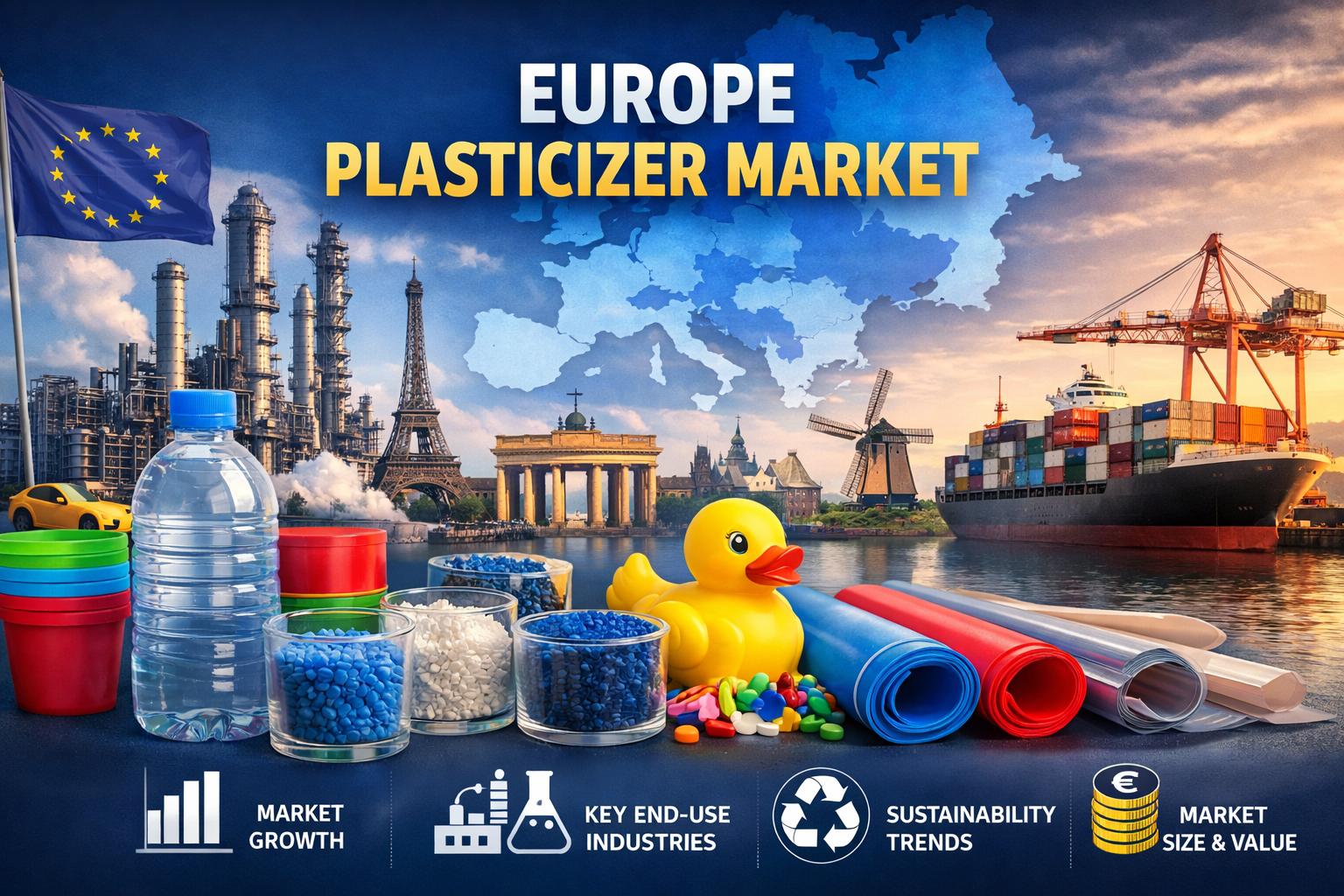
The market for plasticizers in Europe is expected to reach USD 5.15 billion by 2030 from USD 4.00 billion in 2025 at a CAGR of 5.2% during the five-year period. This report provides a comprehensive analysis of the market, including size, share, drivers, europe plasticizer market trends, and constraints, competitive aspects, and prospects for future growth. Strict environmental laws, the need for flexible PVC in important end-use industries, and the quick transition to non-phthalate and bio-based solutions are the main factors driving the market. In Europe, regions such as Germany, France, Italy, and the UK are the biggest consumers of flexible PVC in construction, automotive, electrical, medical, and packaging industries. The demand for flexible PVC in these sectors is growing due to building renovations, trends toward lighter materials in vehicles, and the expansion of packaging and healthcare applications that require durable, safe, and compliant materials.
Download PDF Brochure: https://www.marketsandmarkets.com/pdfdownloadNew.asp?id=9974337
The area is characterized by very strict regulations concerning plasticizers, such as REACH and European Chemicals Agency (ECHA) guidelines, which ban the use of hazardous phthalates and promote the use of safer alternatives. Manufacturers have consequently been quick to switch to high-performance non-phthalate and bio-based plasticizers as they reformulate their products to comply with regulations, customer preferences, and sustainability goals.
Among the plasticizers, non-phthalates are the ones with the highest growth rate in Europe, and this is because they perform well, have reasonable prices, and are versatile, being used in various applications, including the PVC products, which are widely used in construction, automotive, and consumer goods. In fact, the use of some non-phthalates in specific applications is still permitted even though the environmental issues are on the rise, since they comply with the regulations and therefore become the manufacturers' option. Moreover, the development of new non-phthalates that are safe and of low toxicity has gone a long way in making them acceptable. Factors driving the rapid growth of these non-phthalates in the region are the strong demand from the building and infrastructure sectors, stable supply chains, and extensive industrial adoption.
The flooring & wall coverings segment is the main driver of the growth in the Europe plasticizers market. In the flooring and wall coverings category of applications, plasticizers are among the fastest-growing in Europe due to the ever-growing demand for materials that possess the characteristics of durability, flexibility, and resistance to extreme conditions in the construction, automotive interiors, and healthcare sectors. Plasticizers not only enhance the softness and elasticity of PVC-based flooring and wall coverings but also give them a longer life cycle, thus making their application areas include resilient tiles, vinyl sheets, and protective coatings. There is an increase in the growth of this trend, which is directly associated with the increasing consumer preference for high-performance and long-lasting materials, the upsurge of sustainable building projects, and the development of technical textiles. Furthermore, the transition from phthalates to non-phthalate and bio-based plasticizers in flooring corresponds with the strict environmental and safety standards, thus the adoption is further facilitated. A combination of functional advantages and compliance with regulations is making the flooring and wall coverings segment a high-growth application segment in the region.
Main market participants comprise BASF SE (Germany), Evonik Industries AG (Germany), Arkema (France), LANXESS (Germany), Perstorp (Sweden), Polynt (Italy), Clariant AG (Switzerland), Croda International (UK), Proviron (Belgium), and Eastman Chemical Company (US), among others.
Get a Sample Copy of This Report: https://www.marketsandmarkets.com/requestsampleNew.asp?id=9974337
BASF SE (Germany) is one of the top plasticizer suppliers in Europe and the manufacturer of different types of plasticizers, starting from traditional phthalates to a wide range of non-phthalate and specialty grades. The company uses its large integrated Verbund sites in Germany and other European countries to supply plasticizers for construction, automotive, wire and cable, and consumer goods Applications, focusing on REACH-compliant, low-emission products. BASF highlights the groundbreaking, eco-friendly, and high-performance plasticizers that help customers reach their sustainability and circular economy objectives, including materials with recyclability and less ecological harm. The company is one of the key players in the market, through its diverse R&D, regulatory knowledge, and tight partnership with converters and brand owners, in addition to being one of the benchmark suppliers in the region.
Evonik Industries AG (Germany) is a significant specialty chemicals manufacturer and supplier of plasticizers and plasticizer intermediates for the European and global markets. Its plasticizer range is concentrated on adding value and often non-phthalate and specialty solutions for the demanding PVC applications in the areas of construction, automobiles, and industrial goods. Evonik relies on strong research and development capabilities, deep application expertise, and close cooperation with downstream processors to provide formulations for regulatory compliance and performance that meet EU standards for sustainability. The company's production facilities in Europe, combined with its technical service network, allow for a reliable supply of plasticizers, support for formulation, and continuous development of technologies that are safer and more efficient.
BASF and Evonik, being integrated and specialty chemical producers, have the leading positions attributed to the wide range of REACH-compliant portfolios and long history of PVC applications. Their strengths are strong regulatory know-how, strong R&D, and working with the automotive, construction, healthcare, and packaging value chains, which makes them capable of providing customized non-phthalate and bio-based plasticizers. The companies under discussion come up with the low-migration, low-VOC, and high-durability solutions, and furthermore rely on the technologies they have invested in to support recyclability and reduced carbon footprints. It is likely that suppliers having robust compliance systems, technical support, and diversified application coverage will still lead the market as the EU sustainability requirements become stricter.

 English
 Arabic
 French
 Spanish
 Portuguese
 Deutsch
 Turkish
 Dutch
Dutch
 Italiano
 Romaian
 Portuguese (Brazil)
 Greek
Greek