


Cathode Materials Market 2026 Overview: Share, Size, Value, Trends, and Key Player Forecast
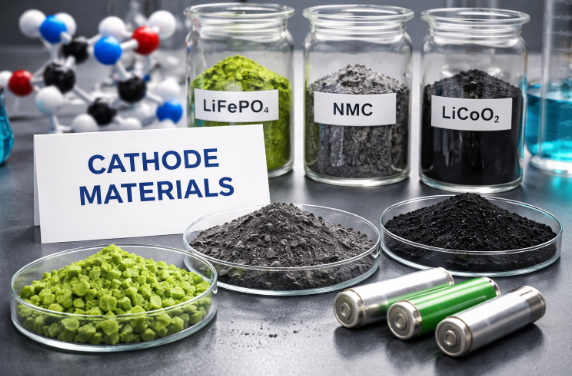
The report "Cathode Materials Market by Battery Type (Lead-acid, Lithium-ion, Nickel-cadmium (NiCd)), Material (Lithium-ion (LFP, LCO, NMC, NCA, LMO), Lead Dioxide), End Use (Automotive, Consumer Electronics, Industrial), and Region - Global Forecast to 2030", cathode materials market is projected to grow from USD 37.78 billion in 2025 to USD 65.15 billion by 2030, at a CAGR of 11.5% during the forecast period. The reports 2026 research report offers an analytical view of the industry by studying different factors like cathode materials market growth, consumption volume, Market Size, Revenue, Market Share, Market Trends, and industry cost structures during the forecast period.
Browse in-depth TOC on "Cathode Materials Market"
160 - Tables
50 - Figures
180 - Pages
Download PDF Brochure: https://www.marketsandmarkets.com/pdfdownloadNew.asp?id=246078739
Cathode materials serve as the positive electrode in rechargeable batteries and play a decisive role in determining a cell's energy density, voltage profile, cycle life, and overall safety. Key chemistries include nickel-rich lithium nickel manganese cobalt oxide (NMC), lithium nickel cobalt aluminum oxide (NCA), lithium iron phosphate (LFP), and lead dioxide for lead-acid systems, each offering a different balance of cost, stability, and performance. The market is expanding rapidly as electric and hybrid vehicles demand higher-capacity, longer-lasting batteries to meet stricter emission and range requirements. At the same time, the consumer electronics sector, including smartphones, laptops, and wearables, provides consistent, large-scale demand for compact, high-efficiency power sources. Growth is further supported by renewable energy storage installations, which rely on advanced lithium-ion technologies to stabilize power grids. Continuous improvements in particle engineering and coating techniques enhance conductivity and thermal stability, while government incentives and recycling initiatives help secure critical raw materials such as nickel, cobalt, and lithium. These combined technological advances, policy measures, and end-use trends are driving the cathode materials market, positioning it as a pivotal component in the global transition toward electrified transportation and low-carbon energy solutions.
The lithium-ion segment is expected to account for the largest share of the cathode materials market, by battery type, during the forecast period
The lithium-ion battery segment is anticipated to hold the largest market share by battery type in the cathode materials industry because of its superior energy density, long cycle life, and ability to deliver consistent power across a wide range of applications. Lithium-ion chemistry offers high voltage and excellent charge–discharge efficiency, making it the preferred choice for electric vehicles, plug-in hybrids, and hybrid electric vehicles that require lightweight packs with extended driving range. Its dominance also extends to consumer electronics—smartphones, laptops, tablets, and wearables—where compact form factors and fast-charging capabilities are essential. In addition, the rapid expansion of stationary energy storage systems for renewable integration and grid balancing further amplifies demand. Advances in cathode formulations such as nickel-rich NMC and cobalt-free options, combined with improvements in manufacturing scale and recycling technologies, have reduced costs and improved supply security, reinforcing lithium-ion's market leadership. Supportive government policies promoting clean energy adoption, coupled with rising investments in gigafactories and next-generation solid-state research, add further momentum. Together, these factors ensure that the lithium-ion segment not only maintains the largest share but also acts as a critical driver of overall growth in the global cathode materials market by setting performance and sustainability benchmarks for competing battery technologies.
Request Sample Pages: https://www.marketsandmarkets.com/requestsampleNew.asp?id=246078739
By end-use, the automotive segment is expected to account for the largest market share during the forecast period
The automotive segment is projected to command the largest market share in the cathode materials industry as electric mobility becomes a central focus for global transportation. Rapid adoption of battery electric vehicles, plug-in hybrids, and hybrid electric vehicles is creating an unprecedented need for high-performance lithium-ion batteries, where cathode materials determine energy density, driving range, and overall battery life. Automakers are scaling production of long-range EVs and commercial fleets, pushing demand for advanced chemistries such as nickel-rich NMC and high-voltage LFP that balance cost, safety, and performance. Government incentives, stricter emission regulations, and consumer preference for sustainable mobility are accelerating this shift, prompting massive investments in gigafactories and localized supply chains. At the same time, the growing adoption of electrified buses, trucks, and two-wheelers across both developed and emerging economies amplifies volume requirements. Continuous improvements in cathode design for faster charging and higher thermal stability further strengthen their role in automotive applications. As the largest and fastest-expanding end-use, the automotive sector not only drives overall cathode materials consumption but also sets performance and sustainability benchmarks, influencing R&D priorities and production strategies across the entire battery ecosystem.
Asia Pacific is projected to register the largest market share during the forecast period
Asia Pacific is expected to hold the largest market share in the cathode materials industry, supported by its dominant position in global battery production and fast-growing end-use sectors. The region is home to leading cell manufacturers and integrated supply chains that cater to the surging demand for electric vehicles, two-wheelers, and energy storage systems. Expanding EV adoption in key markets, coupled with government incentives for clean transportation and renewable energy storage, is creating a strong pull for high-performance lithium-ion batteries. Rapid industrialization and the continuous rise in consumer electronics manufacturing further amplify the requirement for advanced cathode chemistries with higher energy density and better cycle life. Local availability of key raw materials, combined with significant investments in gigafactories and research facilities, enables producers to scale quickly while maintaining competitive costs. Moreover, ongoing innovations, such as nickel-rich and cobalt-free cathodes, are being developed and commercialized across the region, reinforcing its leadership in next-generation battery technologies. These factors together make Asia Pacific the focal point for cathode materials demand, driving market growth and setting global benchmarks for capacity expansion, technological advancement, and supply security.
Some of the leading players in this market include XTC New Energy Materials (Xiamen) Co., Ltd. (China), Shenzhen Dynanonic Co., Ltd. (China), Hunan Yuneng New Energy Battery Materials Co., Ltd. (China), LANDF CORP. (South Korea), POSCO FUTURE M (South Korea), and BASF (Germany).
POSCO FUTURE M (South Korea)
POSCO FUTURE M is a subsidiary of the POSCO Group. The company is a key player in the rechargeable battery materials industry, driving the green energy transition with industry-leading products and cutting-edge technologies. It is also involved in the construction and maintenance of refractories. The company operates through three business divisions: Battery Materials, Advanced Chemical Materials, and Basic Industrial Materials. The company offers a range of essential components for rechargeable batteries, including cathode and anode active materials. It provides lithium-ion battery anode material under its Battery Materials division. In terms of anode active materials (AAM), the company provides natural graphite anode materials known for their high conductivity, energy density, and longevity. POSCO FUTURE M has a presence in the Asia Pacific and North America, with operations in South Korea, China, Canada, the US, and Indonesia. The company has manufacturing plants in Sejong, Seoul, Gumi, Pohang, and Gwangyang.
BASF (Germany)
BASF is one of the leading companies involved in chemical manufacturing, with operations in 92 countries and 235 production sites worldwide. The company operates through seven main business segments, including Chemicals, Materials, Industrial Solutions, Nutrition & Care, Surface Technologies, Agricultural Solutions, and Other. Its Chemicals segment supplies basic chemicals and intermediates for both internal use and external customers. The Materials division focuses on polyamides, plastics, and monomers, while Industrial Solutions provides additives and ingredients for industrial applications. The Nutrition & Care segment offers ingredients for personal care, food, and cleaning products. Surface Technologies delivers coatings, catalysts, and battery materials, and the Agricultural Solutions division supports modern farming through seeds, crop protection, and digital tools. BASF’s diverse portfolio includes specialties in chemicals, performance products, functional materials, and agricultural solutions, positioning the company as a key enabler across industries such as automotive, agriculture, construction, consumer goods, and electronics. The company has regional presence in Europe, Asia Pacific, North America, South America, Africa, and the Middle East.
Request Customization: https://www.marketsandmarkets.com/requestCustomizationNew.asp?id=246078739
LANDF CORP. (South Korea)
LANDF CORP. produces cathode active materials for lithium-ion batteries designed for applications in electric vehicles, e-bikes, drones, IT devices, power tools, household appliances, and energy storage systems. The company manufactures lithium nickel manganese cobalt oxide, lithium nickel cobalt oxide, and lithium nickel manganese oxide. LANDF CORP. primarily operates in Korea, where it has two production plants; it also has a strong presence in China through its subsidiaries, JH Chemicals, and Museok Light & Future Co., Ltd. The subsidiary companies also offer precursors for cathode active material and cathode active material for secondary batteries.
Hunan Yuneng New Energy Battery Materials Co., Ltd. (China)
Hunan Yuneng New Energy Battery Materials Co., Ltd. is one of the leading Chinese producers of lithium-ion battery cathode materials, with operations centered on lithium iron phosphate (LFP) and ternary materials, of which LFP is the main product. These materials are supplied for use in power and energy storage batteries, supporting applications such as electric vehicles and stationary energy storage systems. The company operates five manufacturing bases in Xiangtan (Hunan), Jingxi (Guangxi), Suining (Sichuan), Fuquan (Guizhou), and Anning (Yunnan).
XTC New Energy Materials (Xiamen) Co., Ltd. (China)
XTC New Energy Materials (Xiamen) Co., Ltd. is a manufacturer and supplier of battery materials headquartered in China. The company was listed on the Science and Technology Innovation Board of the Shanghai Stock Exchange in 2021. Its operations include 10 holding companies and branches, 2 equity-invested subsidiaries, and a dedicated research institute. The product portfolio covers lithium cobalt oxide, ternary cathode materials, lithium iron phosphate, sodium-based battery materials, and hydrogen storage alloys. The company has a significant presence in lithium cobalt oxide, ternary cathode materials, and hydrogen storage alloys across its markets. The major customers include international and domestic battery manufacturers such as Panasonic, CATL, CALB, Sunwanda, BYD, Samsung, and LG Chem.
Shenzhen Dynanonic Co., Ltd. (China)
Shenzhen Dynanonic Co., Ltd. is a China-based company engaged in the research, development, production, and sale of materials for lithium-ion batteries. Its products include nano lithium iron phosphate, lithium iron phosphate, and lithium supplement enhancers, which are applied in new energy vehicles, energy storage systems, and other industries. The company was founded in 2007 and is headquartered in Shenzhen, China, where it maintains a strong presence in the domestic market.
➤ Reasons To Buy The Flame Retardant Polyamide Market Report:
• In-depth analysis of the market on the global and regional levels.
• Major changes in market dynamics and competitive landscape.
• Segmentation on the basis of type, application, geography, and others.
• Historical and future market research in terms of size, share growth, volume, and sales.
• Major changes and assessment in market dynamics and developments.
• Emerging key segments and regions
• Key business strategies by major market players and their key methods

 English
 Arabic
 French
 Spanish
 Portuguese
 Deutsch
 Turkish
 Dutch
Dutch
 Italiano
 Romaian
 Portuguese (Brazil)
 Greek
Greek