


Strategic Outlook For The Global On-Shelf Availability Solution Market Over The Next Decade
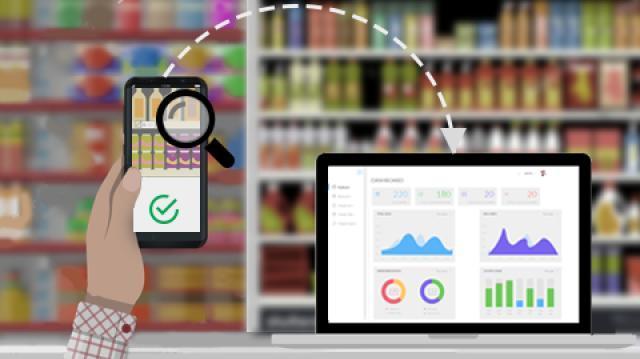
The On-Shelf Availability Solution Market is poised to evolve from a set of niche tools into a critical layer of retail‑operations infrastructure. Strategically, OSA will be tightly woven into unified “store‑operating systems” that coordinate pricing, promotions, labor, replenishment, and customer experience in near real time. Retailers will increasingly treat shelf‑level data as a core asset, feeding AI models that optimize everything from assortment to space planning and marketing. Vendors must therefore ensure that OSA solutions integrate seamlessly with broader data‑platform architectures, supporting open standards, robust APIs, and governance frameworks that satisfy both IT and business stakeholders.
One key strategic direction is the shift from descriptive to prescriptive and autonomous OSA. Today, many deployments focus on identifying gaps and generating tasks. Over time, systems will increasingly anticipate issues and either propose or execute corrective actions: adjusting orders, reallocating inventory between stores, or dynamically modifying planograms to reflect local demand. This evolution requires trust in model accuracy, clear guardrails to prevent unintended consequences, and human‑in‑the‑loop oversight for exceptional cases. Vendors that invest in explainable AI, simulation environments, and change‑management support will help retailers move up this maturity curve.
Another dimension involves the talent and organizational implications of OSA adoption. Store associates, category managers, and supply‑chain planners must learn to interpret OSA insights and embed them into daily routines. Retailers may create new roles—such as shelf‑intelligence managers or availability champions—responsible for translating data into action. CPGs will embed OSA data into revenue‑growth‑management, trade‑promotion, and shopper‑marketing teams. Vendors that provide training, playbooks, and best‑practice communities, not just software, will become trusted partners in this transformation. Aligning incentives across functions and between retailers and manufacturers is crucial for sustained impact.
Finally, macroeconomic, environmental, and consumer‑behavior trends will influence the On-Shelf Availability Solution Market’s trajectory. Economic pressures heighten the importance of operational efficiency and waste reduction, both of which OSA supports. Climate and sustainability goals push retailers to reduce overstock and shrink while maintaining service levels—a balancing act that depends on high‑quality shelf and demand data. Shifts toward healthier, local, and private‑label assortments add complexity to execution. In this context, OSA solutions that deliver demonstrable financial and ESG benefits, underpinned by strong privacy and security practices, will be central to resilient, customer‑centric retail strategies in the decade ahead.
Top Trending Reports:
Testing, Inspection and Certification in Consumer Goods and Retail Market

 English
 Arabic
 French
 Spanish
 Portuguese
 Deutsch
 Turkish
 Dutch
Dutch
 Italiano
 Romaian
 Portuguese (Brazil)
 Greek
Greek