


The Driving Force of Tomorrow: An Introduction to Artificial Intelligence in Automotive
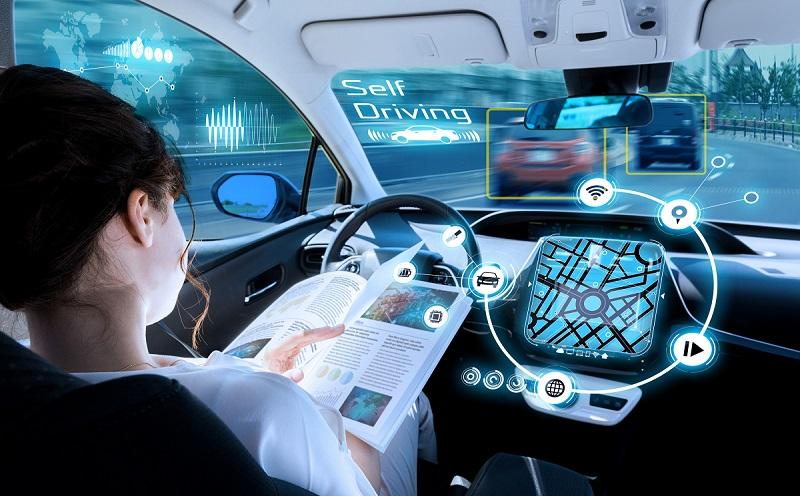
The automotive industry is undergoing its most significant transformation since the invention of the assembly line, driven by the powerful integration of digital technology. At the heart of this revolution is Artificial Intelligence in Automotive, a field dedicated to embedding intelligent systems into vehicles to make them safer, smarter, and more efficient. This goes far beyond the futuristic concept of fully self-driving cars. AI is already a pervasive force in modern vehicles, powering everything from Advanced Driver-Assistance Systems (ADAS) that prevent collisions to intuitive infotainment systems that respond to natural language commands. By enabling vehicles to perceive their environment, reason about potential hazards, and act to protect occupants, AI is fundamentally redefining the relationship between the driver, the car, and the road, paving the way for a future of enhanced mobility and unprecedented safety.
The capabilities of AI in vehicles are powered by a sophisticated fusion of several core technologies. Computer vision, driven by deep learning algorithms, is paramount. It allows the car's cameras to act as its eyes, identifying and classifying objects such as pedestrians, cyclists, other vehicles, and road signs with remarkable accuracy. This visual data is then combined with inputs from other sensors—like LiDAR, which uses lasers to create a 3D map of the surroundings, and radar, which measures the distance and speed of objects—in a process known as sensor fusion. This creates a comprehensive, 360-degree model of the car's environment. Natural Language Processing (NLP) is another critical component, enabling advanced voice assistants that can understand complex commands, control vehicle functions, and provide a seamless, hands-free user experience, transforming the car cabin into a smart, connected space.
The journey toward full autonomy is categorized into distinct stages known as the SAE Levels of Driving Automation, ranging from Level 0 to Level 5. Level 0 represents no automation, where the human driver performs all tasks. Levels 1 and 2, which are common in many new cars today, feature driver assistance systems like adaptive cruise control and lane-keeping assist, but the human remains fully in charge and must constantly monitor the system. The significant leap occurs at Level 3, where the car can handle all aspects of driving under specific conditions, allowing the driver to disengage. Level 4 represents high automation, where the vehicle can operate entirely on its own within a geofenced area or under certain conditions. The ultimate goal is Level 5, or full automation, where the vehicle can perform all driving tasks under all conditions, with no human intervention required at any point.
Ultimately, the integration of artificial intelligence into the automotive sector is driven by three primary, interconnected goals: enhancing safety, improving comfort and convenience, and increasing overall efficiency. AI-powered safety features, such as automatic emergency braking and blind-spot detection, have already been proven to significantly reduce the frequency and severity of accidents, which are predominantly caused by human error. For the occupant, AI enhances the driving experience by automating tedious tasks like navigating stop-and-go traffic and by creating personalized in-cabin environments. From an efficiency standpoint, AI optimizes engine performance and battery management in electric vehicles to maximize range, and in the future, autonomous ride-sharing services promise to reduce traffic congestion and the environmental impact of transportation, creating a smarter and more sustainable mobility ecosystem.
Top Trending Reports:

 English
 Arabic
 French
 Spanish
 Portuguese
 Deutsch
 Turkish
 Dutch
Dutch
 Italiano
 Romaian
 Portuguese (Brazil)
 Greek
Greek