


The Anatomy of Sight: Components of a Modern AI Image Recognition Market Solution
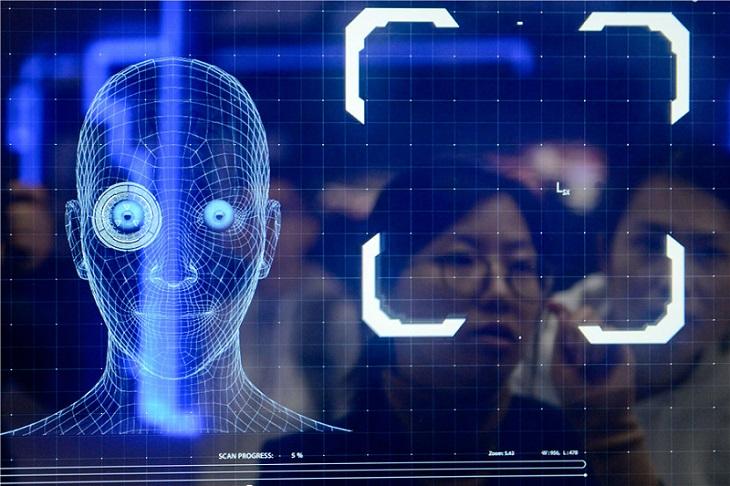
Delivering on the promise of visual intelligence requires more than just a clever algorithm; it involves a complex, integrated system of technologies and processes. A complete AI Image Recognition Market Solution is best understood as a multi-layered technology stack, where each layer plays a crucial role in the journey from raw pixels to actionable insight. This end-to-end solution begins with data capture and moves through processing, analysis, and finally, the delivery of a result to a user or another system. The power and flexibility of a modern solution lie in how these different components—hardware, software, data, and services—are orchestrated to solve a specific business problem, whether it's automating quality control in a factory, diagnosing a medical condition from a scan, or enabling a self-driving car to navigate a busy street safely and effectively.
The software core represents the brains of the operation, containing the sophisticated logic that enables visual understanding. This layer includes the deep learning models themselves, most often Convolutional Neural Networks (CNNs) or, more recently, Vision Transformers (ViTs), which have been trained to perform specific tasks. It also encompasses the development frameworks like TensorFlow and PyTorch that data scientists use to build, train, and fine-tune these models. For many businesses, the most accessible part of this layer is the Application Programming Interface (API) provided by cloud vendors. These APIs offer access to powerful, pre-trained models for common tasks like object detection or facial analysis, allowing developers to easily integrate advanced AI capabilities into their products without needing to become deep learning experts themselves.
This powerful software requires an equally robust hardware foundation to run effectively. The hardware layer is twofold, addressing both the training and inference stages of the AI lifecycle. The training of deep learning models is a computationally intensive process that demands the parallel processing power of high-end Graphics Processing Units (GPUs) or specialized Tensor Processing Units (TPUs), typically found in large data centers. The inference stage—where a trained model makes a prediction on new data—requires different hardware depending on the application. For cloud-based solutions, the same powerful servers are used. However, for edge AI applications, the solution relies on specialized, low-power AI accelerator chips (like ASICs and FPGAs) embedded directly into devices like cameras, drones, and cars, enabling fast, local processing.
Finally, and perhaps most critically, no AI image recognition solution can function without the essential human element provided by data and services. High-quality, accurately labeled data is the lifeblood of any machine learning model; as the saying goes, "garbage in, garbage out." The solution, therefore, includes the processes and services for data acquisition, cleaning, and annotation, which is often a significant and ongoing effort. Furthermore, the complexity of deploying and integrating these systems into existing enterprise workflows creates a strong demand for professional services. This includes expert consulting to design the right architecture, system integration to connect the AI with other business systems, and ongoing maintenance and support to ensure the solution remains reliable, accurate, and secure throughout its operational life.
Top Trending Reports:
Programmatic Advertising Market

 English
 Arabic
 French
 Spanish
 Portuguese
 Deutsch
 Turkish
 Dutch
Dutch
 Italiano
 Romaian
 Portuguese (Brazil)
 Greek
Greek